How to Dry Water Damaged Walls After Tampa's Summer Thunderstorms
Tampa's summer storms push water into wall cavities fast. Here's how to dry water-damaged walls before mold takes hold, and when to call a pro.
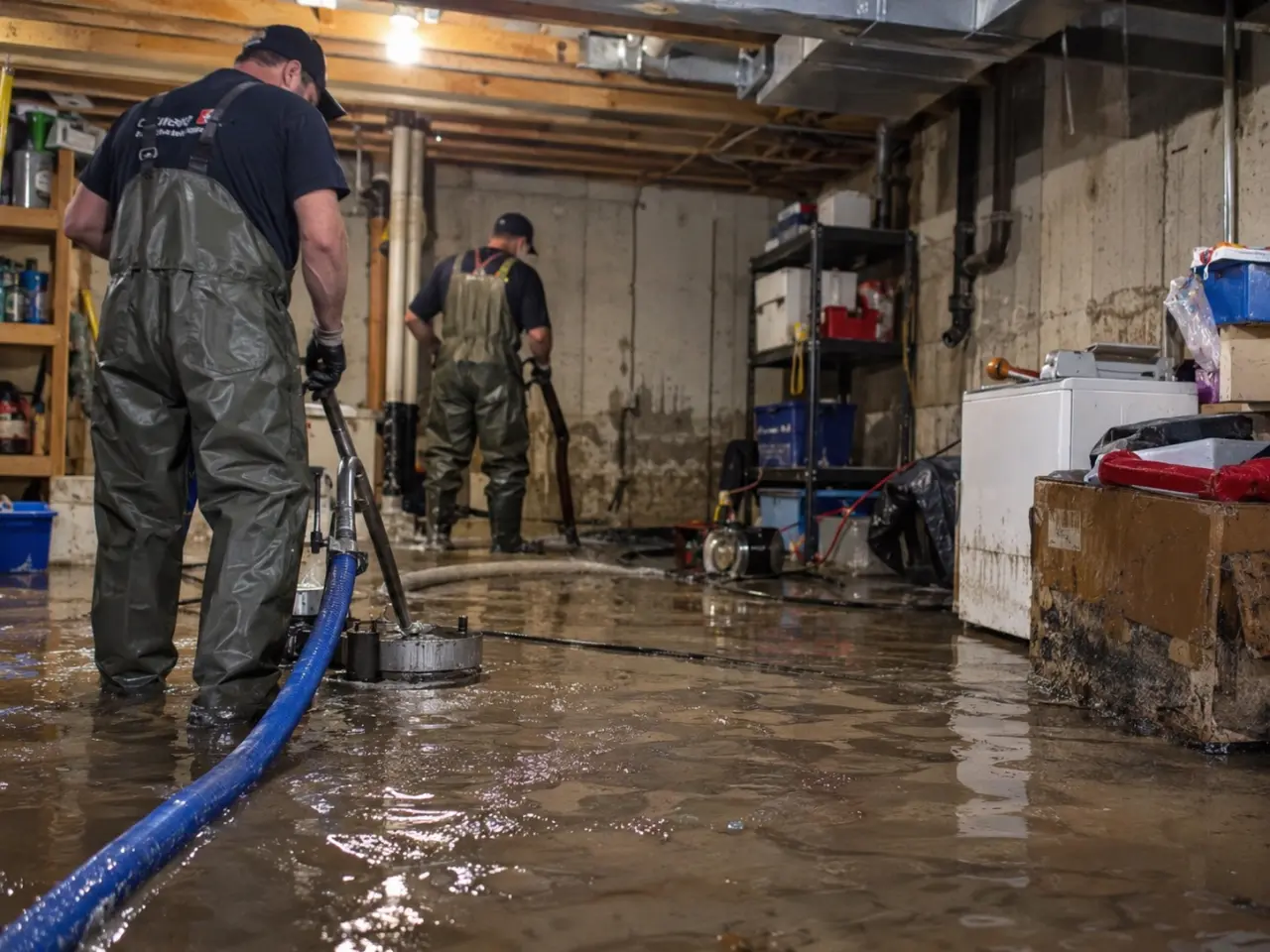
You dry water-damaged walls after a Tampa thunderstorm by stopping the water source, pulling saturated baseboards and insulation, and running high-capacity air movers and dehumidifiers until a moisture meter reads dry - usually 3 to 5 days. The clock matters more than the method: mold can colonize wet drywall in 24 to 48 hours in Tampa's summer heat.
How to dry water-damaged walls after Tampa summer thunderstorms is really a timing problem wrapped in a humidity problem. This guide walks through what our crews see on storm calls across Hillsborough County, how to check wall cavities for hidden moisture, and the exact point where DIY drying stops working.
Why Tampa Summer Storms Soak Walls So Fast
Tampa summer storms soak walls fast because the rain arrives in 20-minute bursts that dump 1 to 2 inches, and the air is already holding 75 to 80 percent humidity before the first drop lands. There is nowhere for that moisture to evaporate to.
Between June and September, Tampa averages roughly 6 to 8 inches of rain per month, and most of it falls in afternoon cells that push water sideways against stucco and block walls. Wind-driven rain finds every gap: failed window caulking, cracked stucco, rotted fascia, and the weep screed at the base of the wall. Water wicks upward through the concrete block and into the drywall on the interior face.
Older homes in Seminole Heights and Hyde Park have a second problem - original 1940s and 1950s construction with minimal weather barriers. We see saturated plaster and lath walls there that hold water far longer than modern drywall. Newer builds in Westchase and Tampa Palms fail differently, usually at window pans and stucco control joints.
Once water is inside the wall cavity, the interior drywall paper becomes a food source for mold. That is the part most homeowners miss. The wall looks fine from the living room. The cavity behind it is at 90 percent relative humidity.
How to Dry Water-Damaged Walls Quickly After a Tampa Thunderstorm
To dry water-damaged walls quickly after a Tampa thunderstorm, start within the first hour: kill power to wet outlets, move furniture off the wall, and get air moving across every wet surface. Speed beats equipment every time.
Here is the sequence our technicians run on a standard storm call:
- Shut off the source. If water is still entering, stop it. That may mean shutting the main, tarping a roof breach, or clearing a blocked patio drain.
- Kill power to affected circuits. Water and live outlets do not mix. Trip the breaker before you touch anything wet.
- Document everything. Photograph the wall, the baseboard, and any standing water before you move it. Your insurance adjuster will want it.
- Pull the baseboards. Baseboard trim traps water against the bottom plate. Remove it and you expose the drywall edge to airflow.
- Drill weep holes. A 3/8-inch hole every 12 to 16 inches along the bottom of the drywall lets trapped water drain and lets air circulate inside the cavity.
- Set air movers and a dehumidifier. Aim airflow along the wall, not straight at it. You want the air skimming the surface and pushing into the weep holes.
If the water came in through a flooded room rather than a wall leak, you are dealing with a bigger volume problem. Our team handles emergency water extraction Tampa around the clock for exactly this scenario - standing water has to come out before wall drying can work.
Run the equipment continuously. Not six hours a day. Continuously. A residential dehumidifier from a big-box store pulls 30 to 50 pints per day. A professional LGR dehumidifier pulls 130 to 180 pints per day at the same temperature. That difference is why DIY drying stalls out on day three.
How to Find Moisture Inside Walls After Heavy Rain in Tampa
You find moisture inside walls after heavy rain in Tampa with a pin-type or pinless moisture meter, a thermal imaging camera, and your nose. Drywall that reads above 16 percent moisture content by weight needs drying; above 20 percent, mold is already a risk.
Most homeowners only check the visible wet spot. The real damage is usually 2 to 4 feet to either side and 12 to 18 inches above it. Water travels along studs and the bottom plate before it ever shows on the painted surface.
Three tools do the job:
- Pin-type moisture meter ($40 to $120). Push the pins into the drywall. Anything over 16 percent is wet.
- Pinless meter ($80 to $200). Scans through paint and tile without leaving holes. Good for finding the edges of the wet zone.
- Thermal camera ($200 to $500, or rent one). Shows the cool spots where evaporating moisture is hiding. Best for scanning a whole wall in under a minute.
Check the wall at three heights: 6 inches off the floor, 24 inches, and 48 inches. If the bottom reading is wet and the top is dry, the water came in low - a slab leak or a door threshold. If the top is wet and the bottom is dry, it came in from above - roof, window, or second-floor plumbing.
Smell matters too. A musty, earthy odor near the baseboard means microbial growth has already started in the cavity. At that point you are not drying a wall, you are remediating one. We handle that with mold remediation Tampa once the structure is dry.
How Long Does It Take for Wet Drywall to Dry in Florida?
Wet drywall in Florida takes 3 to 5 days to dry with professional equipment, and 7 to 10 days or longer with box fans and a consumer dehumidifier. Florida's ambient humidity is the reason - outside air is often wetter than the wall you are trying to dry.
That last point is the one people get wrong. Opening the windows on a 92-degree Tampa afternoon with 78 percent humidity adds moisture to the house. You are not drying anything. You are feeding the problem.
Here is what a realistic drying timeline looks like in a Tampa home in July or August:
- Day 1: Water removed, baseboards pulled, weep holes drilled, equipment set. Wall moisture reads 25 to 40 percent.
- Day 2: Wall moisture drops to 18 to 24 percent. This is the fastest drop you will see.
- Day 3: Wall moisture at 14 to 18 percent. Progress slows. Do not panic.
- Day 4 to 5: Wall moisture reaches 10 to 12 percent, which is the dry standard for Tampa's climate. Equipment comes out.
If the wall is still reading above 16 percent on day five, something is feeding it. A slow supply-line leak, a clogged AC condensate drain, or a roof leak that only shows during rain. We see this constantly in Water Mitigation in Carrollwood, where 1970s ranch homes have original copper lines that pinhole after decades of Tampa's aggressive water.
When Should You Remove Drywall After Storm Water Damage?
You should remove drywall after storm water damage when it is Category 3 water (sewage, floodwater, or any water that has touched the ground), when it has been wet more than 48 hours, or when it is crumbly, sagging, or visibly moldy. Clean rainwater on drywall for under 24 hours can usually be saved.
Category matters more than most homeowners realize. The IICRC S500 standard breaks water into three categories:
- Category 1: Clean water from a supply line or rain entering through a roof. Drywall can often be saved if caught within 24 to 48 hours.
- Category 2: Gray water from a washing machine, dishwasher, or toilet bowl (not the tank). Porous materials usually come out.
- Category 3: Black water from sewage backups, toilet traps, or ground-level flooding. All porous materials come out. No exceptions.
Tampa's summer storms often turn Category 1 into Category 2 within a day. Rainwater picks up roof grit, attic dust, and whatever is on the ground before it enters the wall. If the water sat overnight in a hot house, treat it as Category 2.
For sewage or ground flooding, the cleanup is a different job entirely. Our crews handle sewage backup cleanup Tampa with full containment and antimicrobial treatment, because that water carries bacteria you do not want in a wall cavity.
Cut lines matter. When we remove drywall, we cut 2 feet above the highest wet reading. That gives us a clean edge to work with and removes the hidden moisture the meter cannot see. A 4-foot by 8-foot sheet of 1/2-inch drywall runs $15 to $25 at a Tampa supplier in 2026; installed and finished, expect $2.50 to $4.50 per square foot.
Common Mistakes That Turn a Wet Wall Into a Mold Job
The most common mistake is waiting until the wall looks dry. Painted drywall can look and feel dry on the surface while the cavity behind it is still at 80 percent relative humidity. By the time you see a stain, mold has been growing for days.
Other mistakes we see on nearly every Tampa storm call:
- Running a fan without a dehumidifier. Moving humid air around a humid room does nothing. You need to remove the moisture, not relocate it.
- Opening windows during a rain event. Tampa's outdoor air is wetter than your indoor air from June through September.
- Painting over a wet wall. Latex paint traps moisture. The stain comes back in two weeks, and now you have mold behind a fresh coat.
- Leaving wet insulation in place. Fiberglass batts hold water like a sponge and press it against the drywall. Pull it, bag it, replace it.
- Skipping the baseboard. Baseboards hide the wettest 4 inches of the wall. If you do not pull them, you are drying 80 percent of the problem.
- Trusting a $15 moisture meter from a hardware store. They are better than nothing, but they read shallow. A professional meter reads 1 inch deep.
One more: do not run your AC on fan-only mode thinking it will dry the house. Fan-only pulls humid air through the system and can grow mold in the ductwork. Run the AC normally - the cooling coil removes moisture - and let the dehumidifier do the rest.
When to Call a Professional
Call a professional when the wet area is larger than 10 square feet, when the water is Category 2 or 3, when the wall has been wet more than 24 hours, or when you smell mustiness. Those four conditions push the job past what consumer equipment can fix.
Our team at Tampa Water Force handles wall drying and structural dehumidification across Hillsborough County. We use thermal imaging to map the wet zone, moisture meters to confirm dry standard, and commercial LGR dehumidifiers sized to the cubic footage of the affected rooms. We do not guess at dry - we meter it and show you the readings.
If the water came in through a flooded room or a backed-up drain, we also handle water damage cleanup Tampa from extraction through final drying. One crew, one invoice, one dry standard.
For homes in the older neighborhoods near the bay, we run a lot of calls for Water Mitigation in South Tampa, where 1920s bungalows and block construction hold moisture differently than newer builds. Same process, different drying curve.
Frequently Asked Questions
How do I dry water-damaged walls after a Tampa thunderstorm?
Stop the water source, kill power to wet circuits, pull baseboards, drill 3/8-inch weep holes along the bottom of the drywall, and run air movers plus a dehumidifier continuously for 3 to 5 days. Check wall moisture with a meter daily until it reads 10 to 12 percent.
How long does it take for wet drywall to dry in Florida?
With professional equipment, 3 to 5 days. With box fans and a consumer dehumidifier, 7 to 10 days or longer, and often never fully. Florida's outdoor humidity of 75 to 80 percent means DIY drying frequently stalls before the wall reaches dry standard.
When should I remove drywall after storm water damage?
Remove drywall when it is Category 3 water (sewage or ground flooding), when it has been wet more than 48 hours, or when it is sagging, crumbly, or moldy. Clean rainwater on drywall for under 24 hours can usually be dried in place.
Can wet walls grow mold after a Tampa summer storm?
Yes. Mold can colonize wet drywall in 24 to 48 hours when indoor temperatures are 77 to 86 degrees, which is typical for a Tampa home in July. The window to dry without remediation is short - usually one to two days.
When should I call a water damage restoration professional in Tampa?
Call when the wet area exceeds 10 square feet, when the water is Category 2 or 3, when the wall has been wet more than 24 hours, or when you smell mustiness. Those conditions exceed what consumer-grade equipment can dry.
Get Help With Water Mitigation in Tampa
If your walls are still wet and the meter is not dropping, we can be there today. Tampa Water Force handles Water Mitigation Tampa FL with thermal imaging, commercial dehumidifiers, and daily moisture readings you can see for yourself.
Call (813) 588-6476 and we will walk you through what to do in the next hour - before the mold clock runs out.