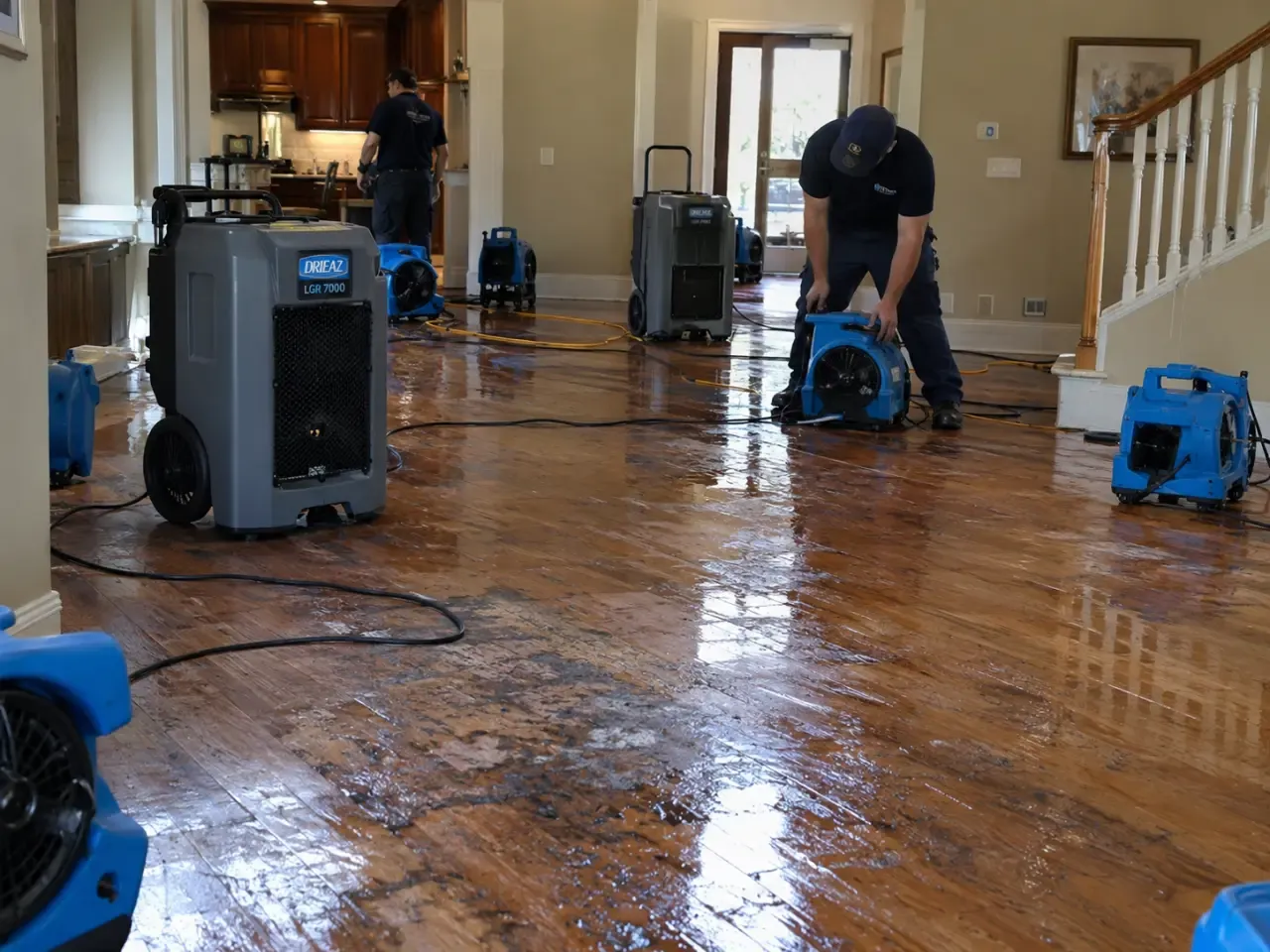
24/7 emergency floodwater removal across Hillsborough County
Flood Water Cleanup Tampa FL - Fast, Dry, Done Right
When stormwater, a burst pipe, or a sewage backup floods your home, every hour counts. Our Flood Water Cleanup Tampa FL crews roll out 24/7 with truck-mounted extraction, refrigerant dehumidifiers, and moisture meters to pull standing water, dry saturated drywall, and stop secondary mold growth before it starts. We serve homeowners and businesses across Tampa, Florida - from South Tampa bungalows to Westchase townhomes - with same-day floodwater removal in Tampa, Florida and honest, upfront pricing.
Live dispatcherUpfront optionsBacked workmanship
What's included
What Our Flood Water Cleanup Includes
Every flood water cleanup job starts with a written scope, so you know what is covered before we touch anything. Extraction, drying, antimicrobial treatment, and documentation are standard. If we find hidden damage - saturated insulation, a wet crawl space, or mold behind a wall - we show you photos and get approval before adding work.
Emergency Water Extraction
Truck-mounted water extraction units and submersible pumps pull standing water fast, then portable water extraction vacuums finish carpet and tight corners. A typical flooded room takes 2 to 4 hours to extract, and we haul out saturated carpet padding the same day so it does not keep the floor wet.
Structural Drying Setup
We place air movers along walls and floors and add refrigerant or desiccant dehumidifiers sized to the cubic footage. Drying runs 3 to 5 days with daily moisture readings. We adjust equipment placement as readings change, so you are not paying for idle machines.
Antimicrobial Treatment
Affected framing, subfloor materials, and wall cavities get treated with EPA-compliant antimicrobial disinfectant. On sewage backup and black water contamination jobs, we use full PPE respirators and protective suits and follow IICRC AMRT protocols for safe removal and disposal.
Moisture Mapping and Documentation
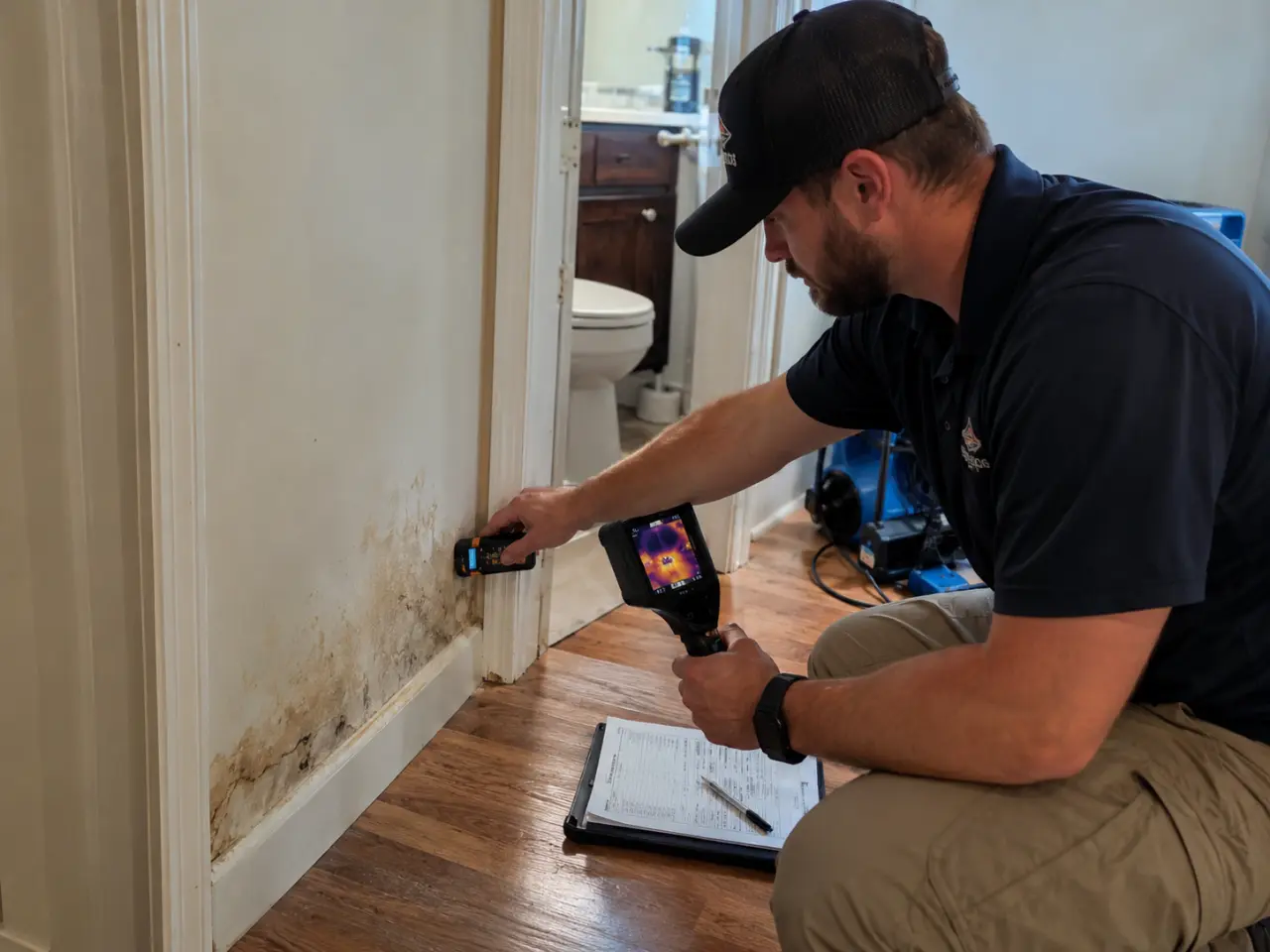
We map every wet zone with a Protimeter moisture meter and thermal imaging camera, then log daily readings. You get a drying report with photos and numbers for your insurance file. This is what turns a claim from a negotiation into an approval.
Debris Removal and Disposal
Unsalvageable drywall, insulation, and flooring get bagged and hauled away, not left in your yard. We keep the work area contained with polyethylene containment sheeting when needed, and we clean up before we leave each day.
Service overview
What Flood Water Cleanup Tampa FL Really Involves
Flood Water Cleanup Tampa FL is the process of removing standing water, contaminated water, and trapped moisture from a flooded structure, then drying it to verified standards so the building is safe to live in again. It is not a shop vac and a box fan. We use truck-mounted water extraction units, submersible pumps, and portable extraction vacuums to pull hundreds of gallons fast, then place air movers and refrigerant or desiccant dehumidifiers to dry the structure. Every job follows the ANSI/IICRC S500 Standard for Professional Water Damage Restoration, and every moisture reading is logged with a Protimeter moisture meter and thermal imaging camera so you can see the dry-down progress in numbers, not guesses.
Tampa floods in specific ways. Summer thunderstorms drop 2 to 3 inches in an hour, storm surge pushes water into South Tampa and Westshore, and aging cast-iron and PVC supply lines burst behind walls in Hyde Park and Seminole Heights. A Tampa flood cleanup company has to know the difference between clean rainwater, gray water from an appliance supply line leak, and black water from a sewage backup - because each one changes the safety gear, the disposal method, and the drying plan. If you search flood damage cleanup near me in Tampa at 2 a.m., you want a crew that has already worked your neighborhood and knows how water moves through a 1950s block home versus a new Tampa Palms build.
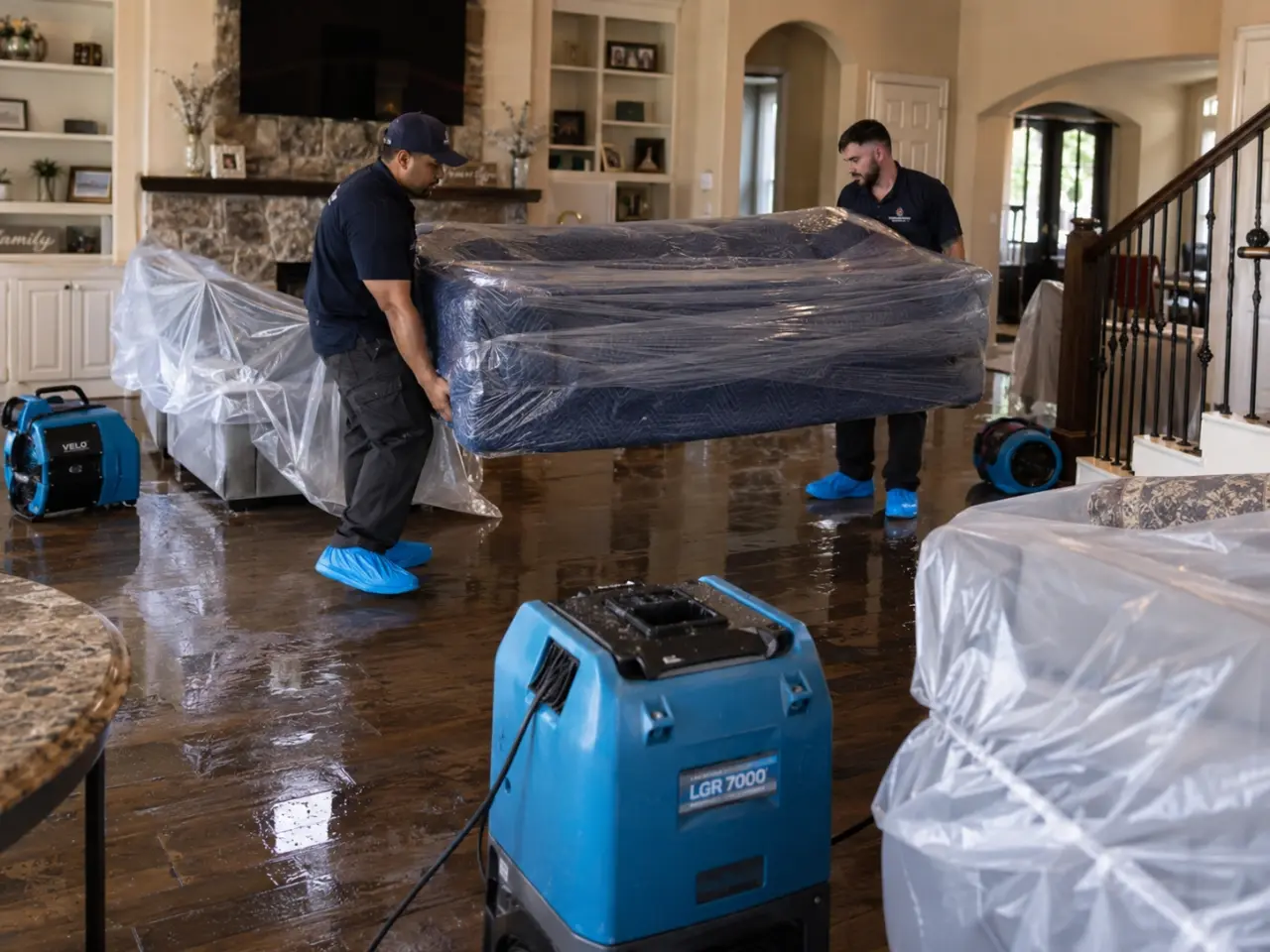
How we workWe verify the cause, compare realistic options, and confirm the repair before we leave.
The service timeline
Our Flood Water Cleanup Process
The process flexes to the condition, but these checkpoints keep decisions clear.
Emergency Call
You call (813) 588-6476 and speak to a live dispatcher, day or night. We ask what flooded, how deep it is, and whether the water is clean, gray, or black. That tells us what equipment to load and whether to treat it as a sewage backup and black water contamination job. You get an arrival window on the spot, usually 60 to 90 minutes.
Inspection and Scope
A crew chief walks the property with a Protimeter moisture meter and thermal imaging camera, mapping every wet zone - walls, ceilings, crawl spaces, and subfloors. We photograph everything and mark water lines. Within about 30 minutes you get a written scope: what we will extract, what we will dry, and what it costs.
Water Extraction
We pull standing water with a truck-mounted water extraction unit and submersible pumps, then switch to portable water extraction vacuums for carpet and tight corners. A typical flooded living room takes 2 to 4 hours to extract. We haul out saturated carpet padding and any drywall that cannot be saved, and bag contaminated debris for proper disposal.
Structural Drying
We set air movers along walls and floors to create a drying vortex, then add refrigerant dehumidifiers or a desiccant dehumidifier for deep humidity control. Drying typically runs 3 to 5 days. We check moisture readings daily and adjust equipment placement until every reading hits the dry standard for your material type.
Final Verification
Before we pull equipment, we take final moisture readings and compare them to our day-one baseline. You get a drying report with photos and readings for your insurance file. We also walk you through what to watch for over the next two weeks and how to keep indoor humidity under 55 percent so the structure stays dry.
Tools & methods
Equipment and Methods We Use
Purpose-built equipment, used by trained technicians, so the job is done accurately the first time.
Truck-Mounted Water Extraction Unit
Pulls hundreds of gallons of standing water fast from carpets and hard floors. It is the first piece of equipment on site and the reason most rooms are water-free within a few hours.
Submersible Pump
Used for deep standing water in crawl spaces, basements, and garages where a vacuum cannot reach. It moves high volumes quickly so we can start drying sooner.
Refrigerant and Desiccant Dehumidifiers
We run Dri-Eaz and Phoenix Restoration Equipment units to pull moisture out of the air. Refrigerant units handle standard jobs; desiccant units handle deep humidity and cooler spaces.
Air Movers
XPOWER and B-Air air movers create a drying vortex along walls and floors, speeding evaporation so dehumidifiers can capture the moisture. Placement matters more than quantity.
Thermal Imaging Camera and Moisture Meter
A thermal imaging camera finds hidden water behind walls and under floors, and a Protimeter moisture meter gives us exact readings. We use both to map the job and verify dryness.
HEPA Air Scrubber and Negative Air Machine
These capture airborne spores and dust during removal work. On mold-related or contaminated jobs, they keep the rest of your home out of the work zone.
Injectidry Floor Drying System
For water trapped under hardwood, tile, or laminate, this system pushes dry air directly into the subfloor cavity. It often saves the floor instead of requiring a full tear-out.
Use cases
When to Call for Flood Water Cleanup
These examples show how the service framework adapts rather than forcing every call through one repair.
Seminole Heights Burst Pipe
A supply line burst inside a hallway wall of a 1948 bungalow overnight. Water spread under the original hardwood and into two bedrooms. The homeowner found it at 6 a.m. with standing water in the hallway. → We extracted 40 gallons, opened the wall cavity, dried the framing with air movers, and used Injectidry mats to dry under the hardwood without removing it. Drying finished in 4 days with no floor replacement needed.
Westchase Appliance Leak
A washing machine supply hose failed and dumped roughly 60 gallons across a laundry room, hallway, and two bedrooms. Carpet padding was soaked and water had reached the base of the walls. → We extracted the water, removed and replaced the padding, dried the carpet in place, and dried the wall bases with air movers and a refrigerant dehumidifier. All rooms hit dry standard in 3 days.
Problems we solve
Flood Problems We Solve in Tampa Homes
Most flood calls we run in Tampa fall into a handful of patterns. Here is what they look like and what we do about them.
Storm and floodwater intrusion through doors and garage
We extract the standing water, remove saturated baseboards and drywall to the water line, and dry the wall cavities with air movers and dehumidifiers. For storm surge cleanup service in South Tampa, we add antimicrobial treatment because bay water carries contaminants.
Burst pipe water damage behind walls
We use thermal imaging cameras and moisture meters to trace the water path, open the wall where needed, extract and dry the cavity, and treat framing with antimicrobial disinfectant. We document everything so your carrier sees the full scope.
Sewage backup and black water contamination
Our IICRC AMRT-certified techs treat it as a contaminated-water job: full PPE, containment, removal of affected porous materials, and disinfection with EPA-compliant products. We follow OSHA hazard communication and worker safety standards throughout.
Appliance supply line leaks and water heater failures
We shut down the source, extract the water, and dry the affected rooms. If the leak ran under tile or laminate, we use Injectidry floor mat systems to dry the subfloor without tearing out the whole floor.
Pricing process
What Flood Water Cleanup Costs in Tampa
$1,200 - $6,500 depending on scope
Square Footage Affected
More area means more extraction time, more air movers, and more dehumidifier capacity. A 200 square foot bathroom is a different job than a 1,200 square foot ground floor, and pricing scales with the volume of water and the drying equipment required.
Water Category
Clean water from a supply line is the simplest job. Gray water from an appliance or washing machine needs antimicrobial treatment. Black water from a sewage backup requires containment, PPE, and disposal, which adds labor and material costs.
Material Removal
Carpet padding almost always comes out. Drywall, insulation, and flooring may need to be removed to the water line. The more material we have to cut out, bag, and haul away, the higher the cost - but leaving it in place risks mold.
Questions before we arrive
Frequently Asked Questions About Flood Water Cleanup in Tampa
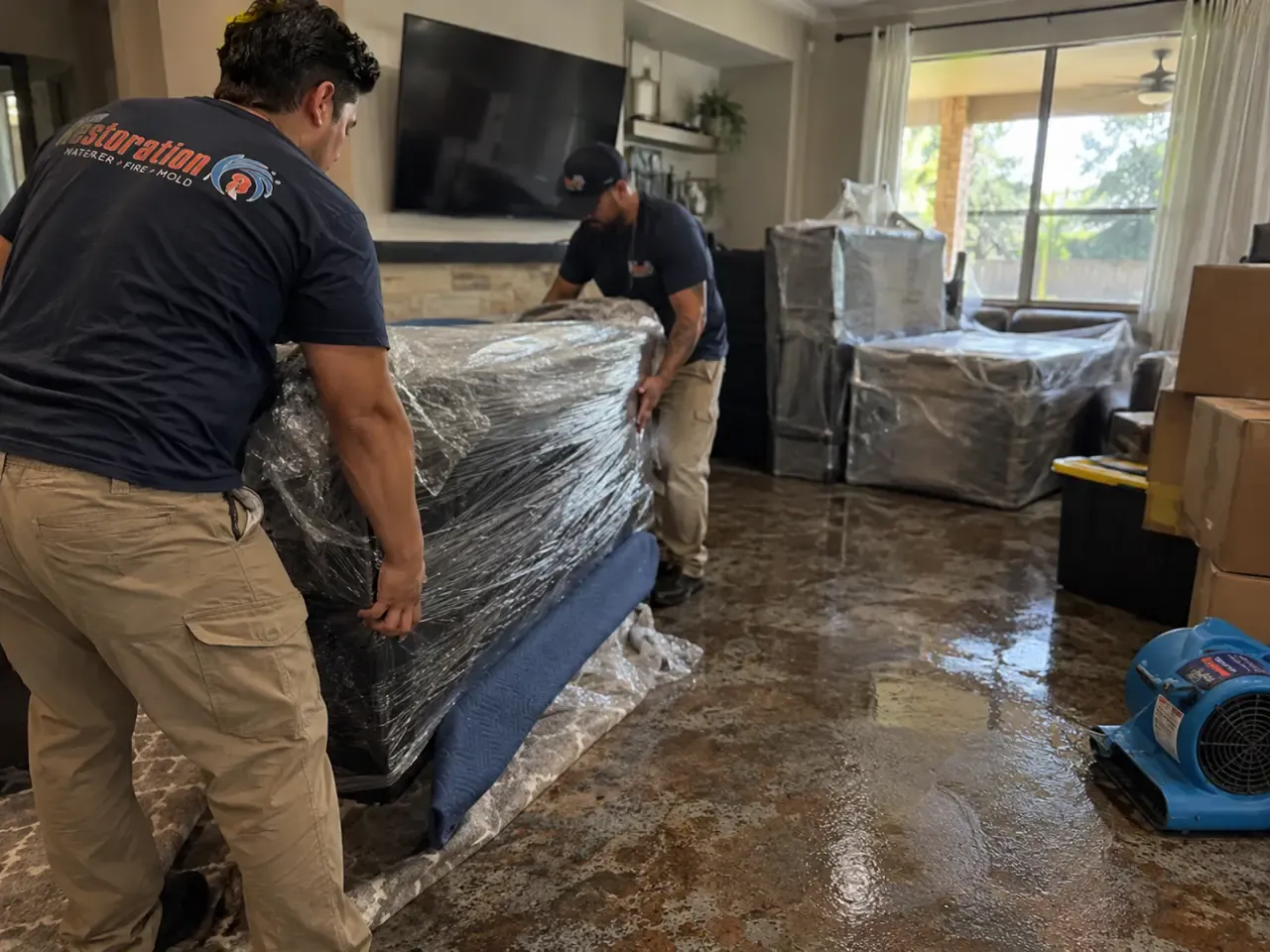
How soon should flood water cleanup begin in Tampa?
Flood water cleanup in Tampa should begin within 24 hours, and ideally within the first 6 to 12. Mold can start growing on wet drywall and carpet padding in 24 to 48 hours, and subfloors begin to swell in about the same window. In Tampa's humidity, that clock runs faster than in drier climates. If water has been sitting more than 48 hours, expect us to treat it as a contaminated-water job with antimicrobial disinfection and possible drywall removal.
Who offers flood damage cleanup near me in Tampa?
Tampa Water Force offers flood damage cleanup near me in Tampa and across Hillsborough County, with 24/7 dispatch and most crews on site within 60 to 90 minutes. We are IICRC certified, insured, and based locally, so we know the building stock in Seminole Heights, Westchase, and South Tampa. Call (813) 588-6476 and a live dispatcher will confirm your address and give you an arrival window.
What does professional floodwater removal include?
Professional floodwater removal includes standing-water extraction with truck-mounted and portable units, removal of unsalvageable carpet padding and drywall, structural drying with air movers and dehumidifiers, daily moisture readings, and antimicrobial treatment. It also includes documentation for your insurance claim. A typical Tampa job runs 3 to 5 days of drying after the initial 2 to 4 hour extraction, depending on how deep the water got and what materials were affected.
Does insurance cover flood restoration in Tampa, Florida?
Most homeowners policies cover sudden and accidental water damage - burst pipes, appliance supply line leaks, and roof leak water intrusion - but standard policies do not cover rising floodwater, which requires separate NFIP or private flood coverage. We document every job with photos and moisture readings, bill most major carriers directly, and can walk you through what your policy likely covers before work begins. Call us and we will help you sort it out.
Related services
Related Services
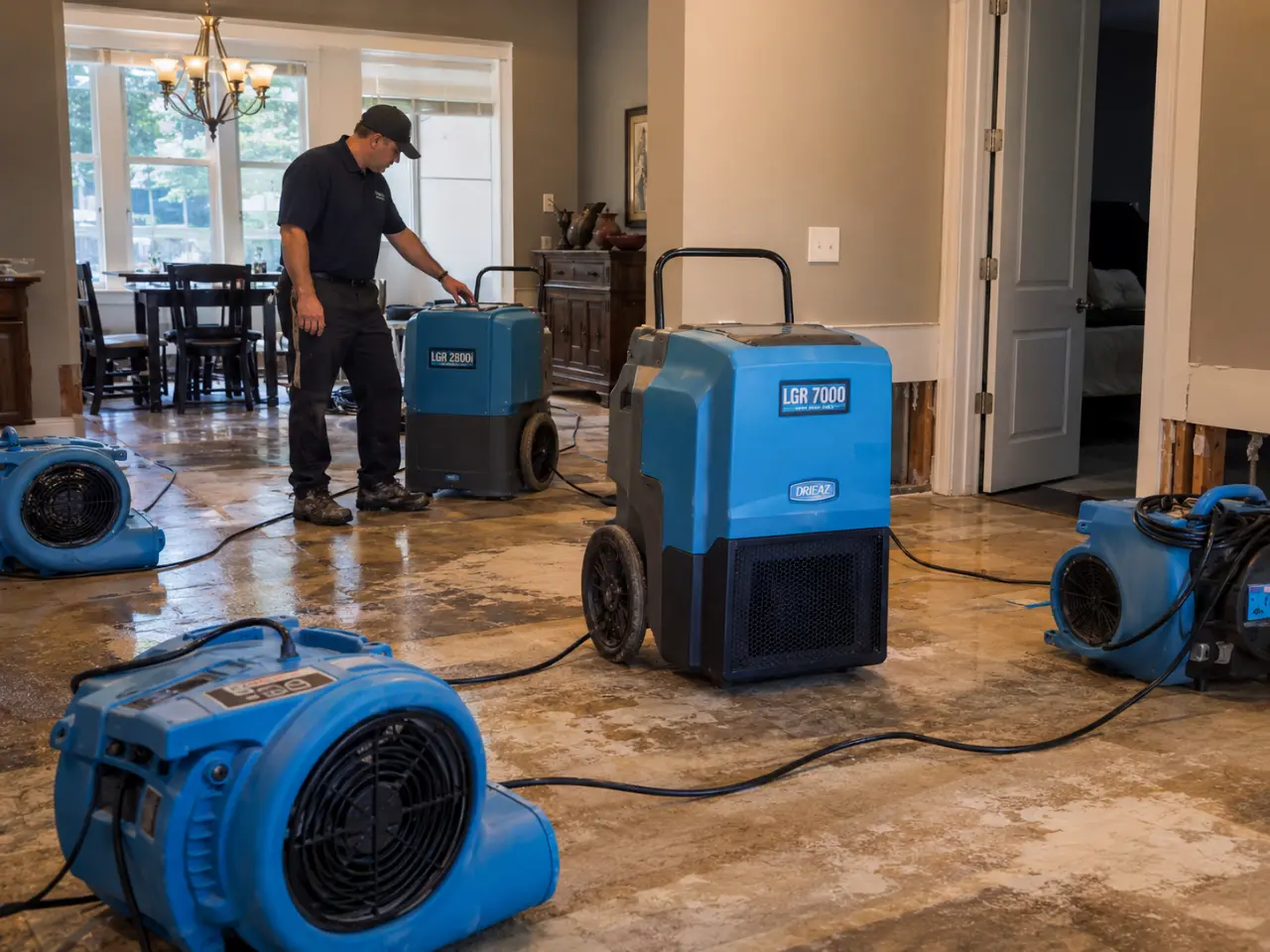
Emergency Water Extraction
When your floor is still under water, extraction comes first. We pull standing water with truck-mounted units and submersible pumps, usually within 60 to 90 minutes of your call, so the flood water cleanup Tampa FL process can start immediately and the water stops spreading into adjacent rooms.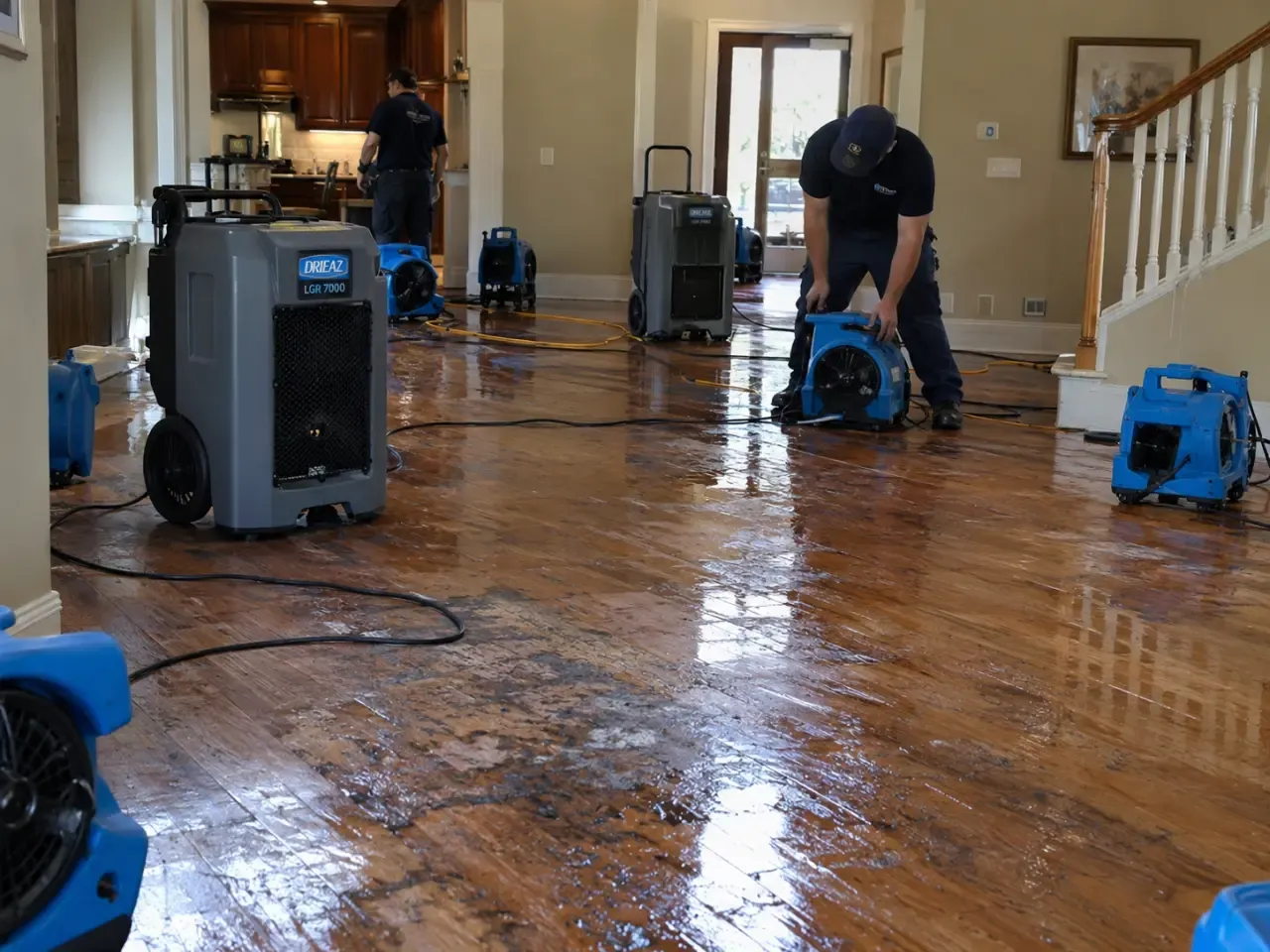
Water Damage Cleanup
After the water is out, water damage cleanup handles the rest: removing saturated drywall and insulation, treating framing with antimicrobial disinfectant, and drying the structure. It is the step that prevents a wet wall from becoming a mold job, and it pairs directly with flood damage cleanup Tampa FL work.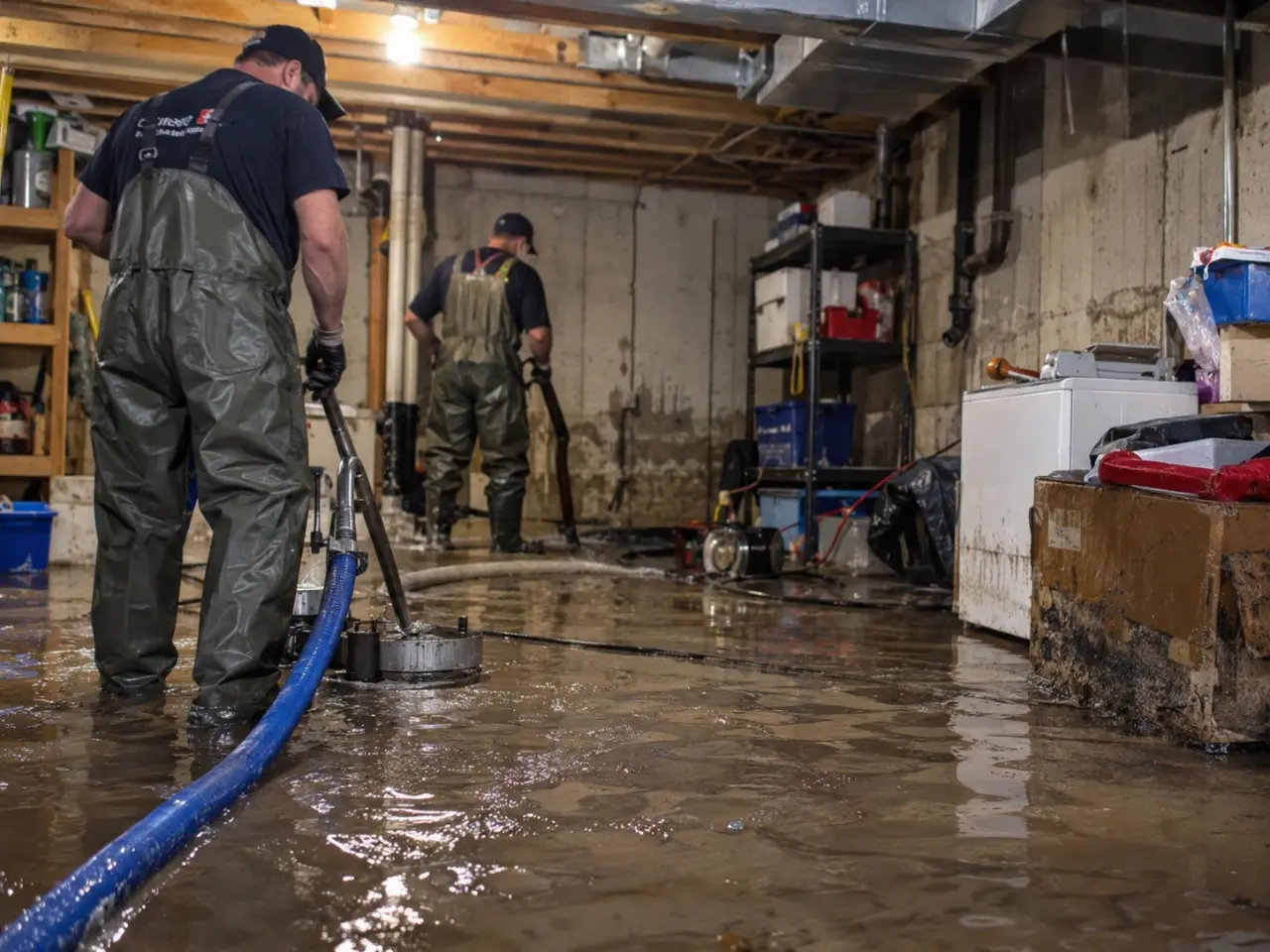
Basement Water Removal
Tampa homes with crawl spaces and below-grade storage flood fast during summer storms. We pump them out, dry the joists and subfloor materials, and check for standing water in crawl spaces that can keep humidity high for weeks. This is often the hidden part of a floodwater removal in Tampa, Florida job.Ready when you are
Need Flood Water Cleanup Tampa FL Right Now?
Water spreads fast and mold does not wait. Call Tampa Water Force at (813) 588-6476 for 24/7 emergency flood water cleanup in Tampa, Florida. We are IICRC certified, insured, and dispatch from Tampa - most crews arrive within 60 to 90 minutes. One call and we start pulling water.
Talk with the local team
Request Flood Water Cleanup
We answer the phone 24 hours a day, seven days a week, including holidays. Tell us what happened and where you are, and we will dispatch the nearest crew with extraction and drying equipment on board. Most Tampa addresses see us within 60 to 90 minutes.